
Credit or Grant?
Why €25,000 Start-up Loans Often Fail
Many founders fail due to the hurdles of local banks for small loans. Find out why state subsidies are the safer alternative and how the house bank principle really works.
 AI generated Image
Many founders in Germany use the phase of unemployment as an opportunity to take the step into self-employment with a strong business idea. But when it comes to start-up capital, many hit invisible barriers. Why do applications for small loans up to €25,000 fail so often at local banks, and what state alternatives secure your success?
The business plan is ready, the market analysis is promising, and motivation is high. To make the first investments, many founders plan the classic route: A start-up loan (e.g., KfW StartGeld) for a manageable amount of €20,000 to €30,000. But the reality at local banks (Sparkasse, Volksbank, etc.) often looks different. Instead of a straightforward approval, banks frequently demand private guarantees or securities for amounts around €25,000—guarantees that a founder coming out of unemployment naturally can hardly provide.
The Economic Reality: The House Bank Principle
To understand this process, one should not blame the banks; it is a purely business-administrative structure. State-backed start-up loans like the renowned KfW-StartGeld are not issued directly by the KfW, but processed through the so-called House Bank Principle (Hausbankprinzip). Your local bank bears a residual risk despite the state's liability exemption and carries the entire administrative burden.
For a credit institution, the examination, documentation, and processing effort for a loan of €25,000 is almost identical to the effort for a loan of €150,000 or more. Since the interest income from small loans barely covers the personnel and bureaucratic costs of the bank, many institutions tend to set the risk hurdles extremely high. Therefore, amounts below €30,000 to €50,000 are rarely prioritized in regular banking business—unless the risk is completely eliminated by a liquid guarantor.
\"Those who lose valuable time moving from bank to bank often overlook the much safer alternative: State subsidies with no repayment obligation.\"
The Smart Solution: Focus on Non-Repayable Grants
If you are founding a business out of existing unemployment (whether ALG I or Bürgergeld), the legislature has created special tools that step in exactly where loans block—and completely without a guarantor or repayment obligation.
- Start-up Grant (for ALG I recipients): This state subsidy is the most powerful tool. In the first phase, you continue to receive your full monthly unemployment benefit plus a €300 flat rate for social security. In total, this often results in between €15,000 and €20,000 of real equity.
- Entry Money & Investment Grant (for Bürgergeld recipients): Even when receiving Bürgergeld, guarantor-free financing is possible. In addition to the monthly entry money, Jobcenters often grant a direct, non-repayable investment subsidy of up to €5,000 for tangible assets.
Prerequisite for Success: The Business Plan
However, neither the Employment Agency (Agentur für Arbeit) nor the Jobcenter gives away this capital without a thorough examination. To get the subsidies approved, the authority strictly requires the statement of an expert authority. The core of this examination is a complete, professional business plan including a detailed financial and liquidity plan for the first three years.
link Related Articles
- Learn how to save the costs of creating the business plan here: The New AVGS Voucher 2026.
- Are you still interested in classic loans? Read: The 5 Most Common Mistakes in KfW Loan Applications.
A precisely calculated concept shows the authority that your project is viable in the long term and will permanently lead you out of the need for assistance. With a concept approved by experts, your chances at banks also increase enormously in the second stage, should larger investment amounts be needed later for expansion phases.
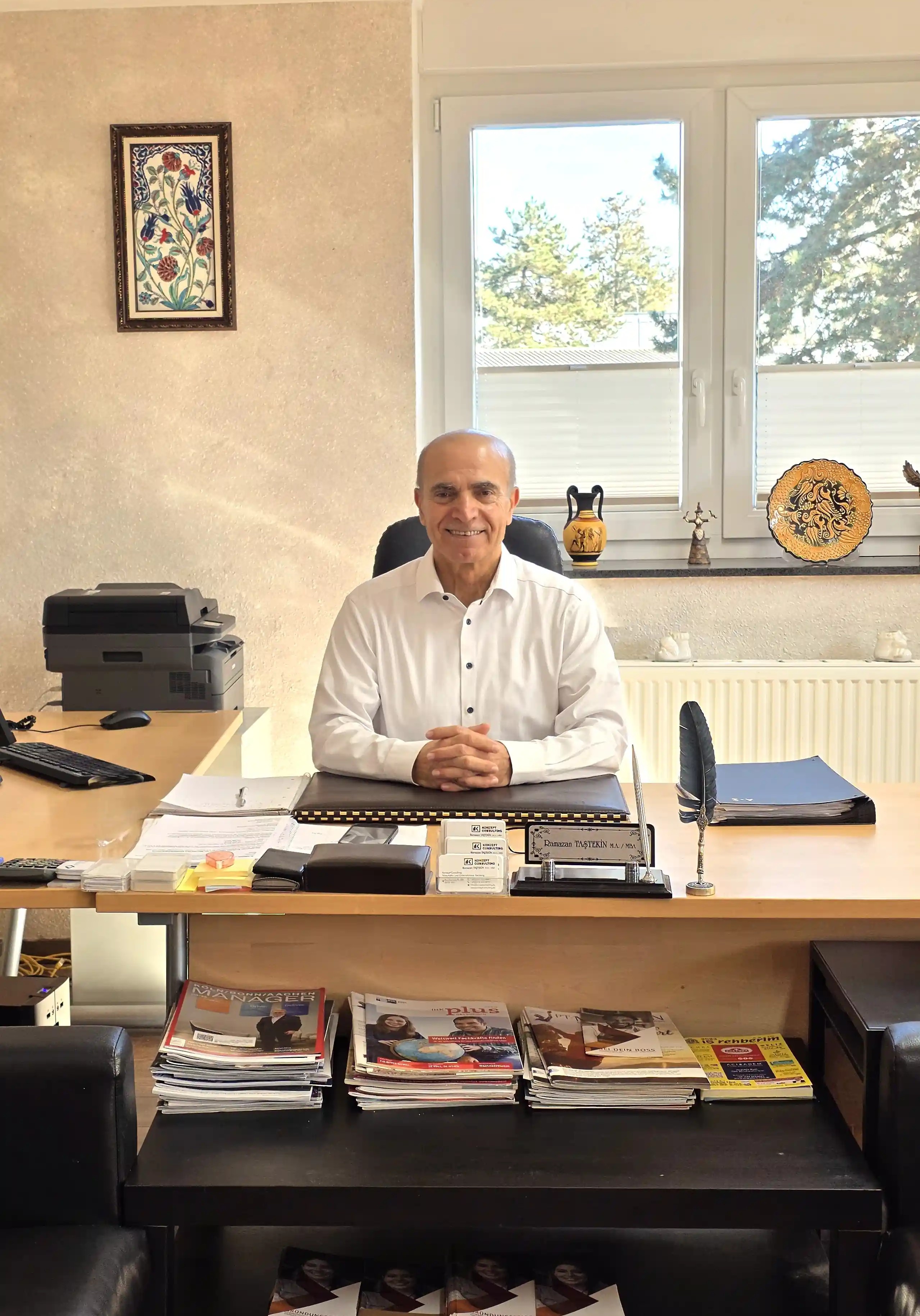
Ramazan Tastekin
Managing Director of Konzept Consulting. BAFA-certified business consultant. Specialized in subsidies, business plans, and strategic company succession across Germany.
Subsidies Check: Free & Non-Binding
Let's check together whether the 100% AVGS, the BPW NRW, or BAFA funds are suitable for you. Nationwide online or on-site in Cologne.